Jack A Roth Translational Research
Bench to Bedside Lung Cancer Research
Welcome
Research into the causes and treatment of cancer has made extraordinary progress over the past 20 years. This research has benefitted not only cancer patients, but has fostered progress in many other medical fields, the most recent example being the development of Covid-19 vaccines. For over 40 years our laboratory has been dedicated to improving treatments for lung and associated cancers. Discoveries made in the laboratory are focused on understanding the vulnerabilities of cancer and developing new treatments to target those vulnerabilities which can rapidly be brought to patients. The purpose of this website is to share those discoveries with all who are interested and rapidly make new discoveries available to the scientific community. Scroll through the pages to see the latest research from our lab. The history of Thoracic Surgery at MD Anderson and our laboratory and clinical research program is summarized on the last page.
https://en.wikipedia.org/wiki/Jack_A._Roth
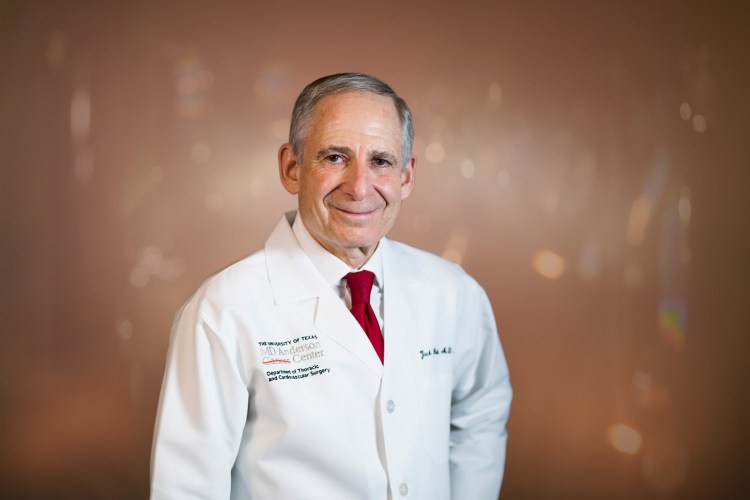
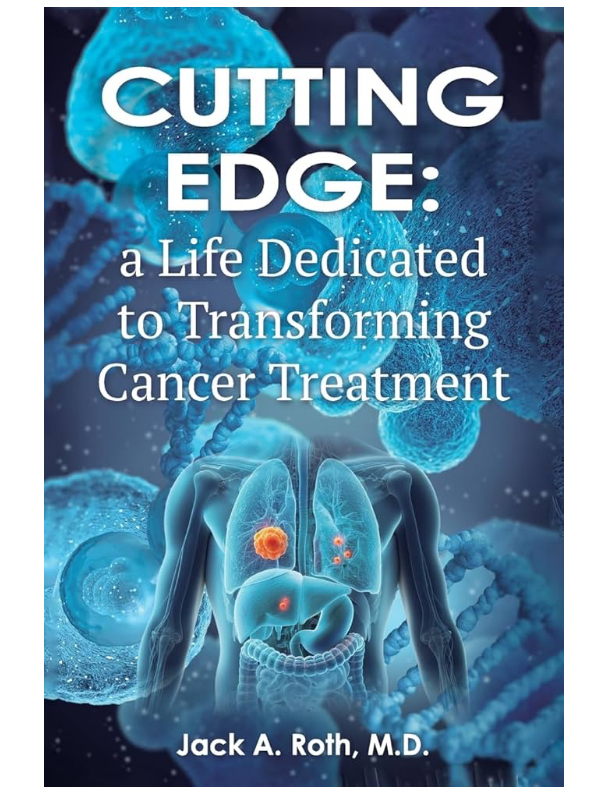
Dr. Jack A. Roth’s Cutting Edge is a riveting memoir that chronicles a groundbreaking career in oncology and cancer research. Spanning over four decades, Roth shares his relentless pursuit of innovative treatments that have revolutionized care for lung and other cancers. With over 700 peer-reviewed publications and $100 million in research funding, Roth has been at the forefront of developing gene therapies, targeting cancer vulnerabilities, and leading transformative clinical trials.
The book delves deeply into the scientific discoveries that shaped modern cancer treatment, from restoring tumor-suppressor genes to pioneering gene delivery systems. Roth also explores the intricate dynamics of navigating regulatory bodies, securing funding, and addressing the politics of scientific research. Personal anecdotes interweave with professional milestones, painting a vivid picture of his passion for helping patients live longer and healthier lives.
Rich with insights, Roth critiques systemic inefficiencies, advocating for reforms to accelerate the dissemination of life-saving innovations. His reflections extend beyond the lab, offering a glimpse into the personalities and challenges of the medical-industrial complex.
Cutting Edge is more than a memoir; it’s a tribute to the power of perseverance and the patients who inspire breakthroughs. For anyone touched by cancer—patients, caregivers, or professionals—it is a beacon of hope and a call to action. Dr. Roth’s narrative is not only a testament to the progress made but a roadmap for the future of cancer treatment and research.
Listen to the Podcast: https://notebooklm.google.com/notebook/2bf6804f-f2fe-4621-b0ca-10fc0a9ae048/audio
Available on Amazon in hardcover, paperback, and Kindle editions. Audio Book available on Google Play Books. All proceeds from the book will be donated to support cancer research.
Non-small cell lung cancer in humanized mouse models. https://jackarothmd.wordpress.com/page/2/?theme_preview=true&iframe=true&frame-nonce=664d1287
Overcoming resistance to osimertinib by TUSC2 gene therapy in EGFR mutant NSCLC. https://jackarothmd.wordpress.com/page/3/?theme_preview=true&iframe=true&frame-nonce=664d1287d4
Comprehensive characterization of 536 patient- derived xenograft models prioritizes candidates for targeted treatment https://jackarothmd.org/page/4/
Long term benefit of SABR(stereotactic ablative radiation therapy) for operable early stage NSCLC. https://jackarothmd.org/page/5/
PDXNet Portal https://jackarothmd.org/page/6/
Novel mechanism of resistance to targeted drugs for NSCLC https://jackarothmd.org/page/7/
3-Phosphoinositide-dependent kinase 1 drives acquired resistance to osimertinib https://jackarothmd.org/page/8/
A new approach to treating metastatic non-small cell lung cancer (NSCLC) published open access: TUSC2 immunogene enhances efficacy of chemoimmuno combination on KRAS/LKB1 mutant NSCLC in humanized mouse model
https://jackarothmd.wordpress.com/page/9/?theme_preview=true&iframe=true&frame-nonce=5b2adc917d
NPRL2 gene therapy induces effectiveantitumor immunity in KRAS/STK11 mutant anti-PD1 resistant metastatic human NSCLC in a humanized mouse model
https://elifesciences.org/reviewed-preprints/98258
TUSC2 immunogene therapy enhances checkpoint blockade through increased cytotoxic immune activation in chemo-resistant small cell lung cancer (SCLC) in humanized mice
Completion of Acclaim-1 Dose Escalation:Recommended Phase 2 Dose of Quaratusugene Ozeplasmid Gene Therapy and Osimertinib
Overcoming sotorasib-acquired resistance in KRASG12C mutant NSCLC by TUSC2 gene therapy
https://elifesciences.org/reviewed-preprints/106875


 Jack A Roth MD Translational Research